QualRotate Machinery SH
Horizontally Split Casing

Horizontally Split Casing Centrifugal Compressor

SP Series(Medium-Low Pressure, Capable of Handling Ultra-large Flow Rates)
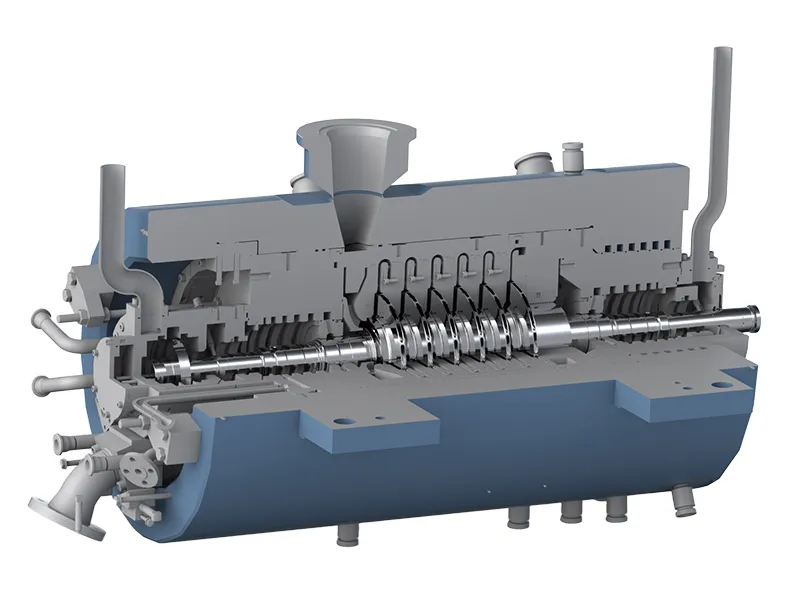
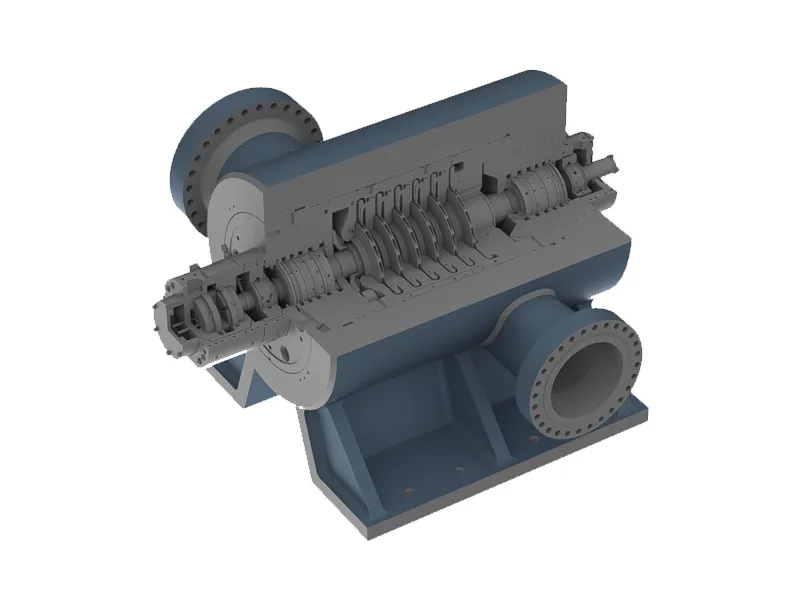
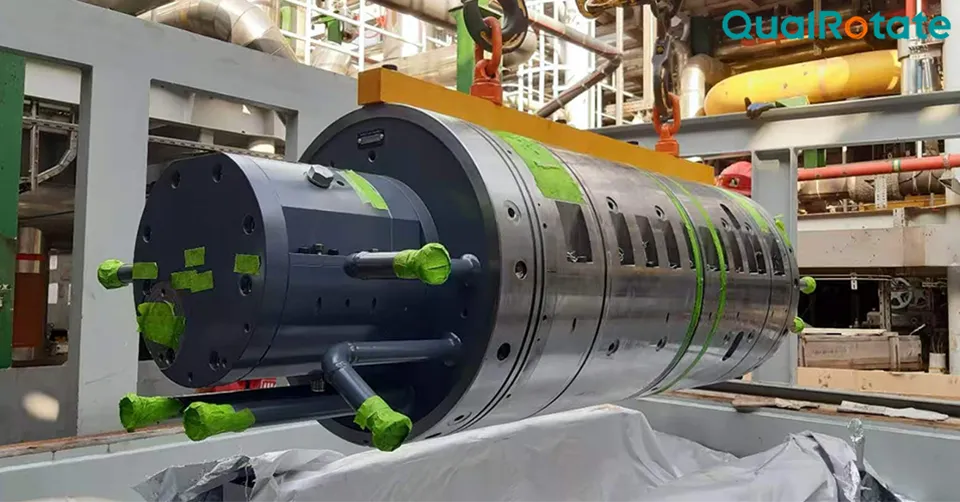
Horizontally split single-shaft centrifugal compressors are suited to medium-low pressure and large-flow process duties. With mature casing arrangement, convenient maintenance access, and broad impeller-size coverage, the SP Series supports reliable continuous operation across petrochemical and general industrial gas services.
Overview
Advantage
Maintenance
Specification
Resource

SP Series (Medium-Low Pressure) Centrifugal Compressor Overview

Application Scenarios:

  • Onshore/Offshore Oil and Gas

  • Petrochemicals

  • Fertilizers

  • Olefins

  • Refining

  • General Chemicals

  • Dry Chlorine


Typical Model: 2SP806-B, suitable for instrument air compression

  • Outlet Pressure: 8 barG

  • Flow Rate: Approx. 70,000 m³/h


SP Series (Medium-Low Pressure) Centrifugal Compressor Overview

Advantages

  • Horizontally split casing simplifies maintenance and internal inspection

  • SP frame range covers medium-low pressure, ultra-large-flow applications

  • Suitable for process gases requiring stable continuous operation

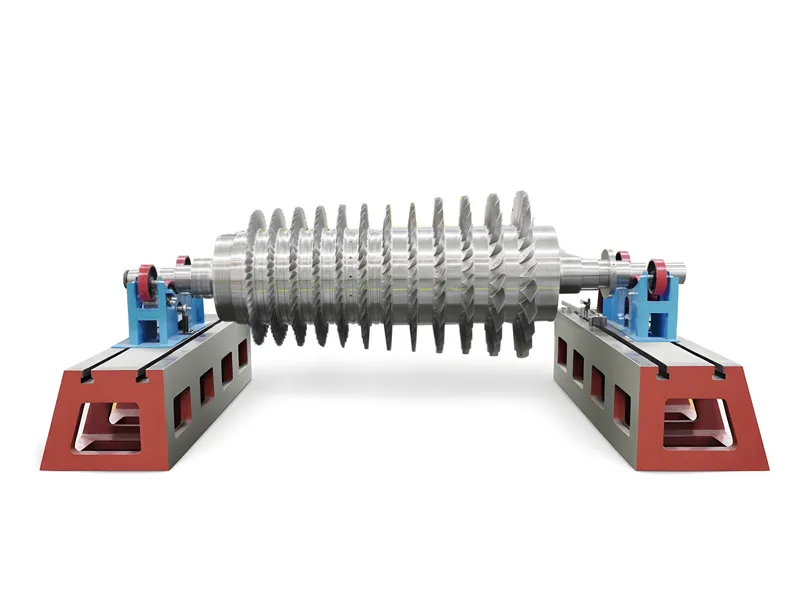
  • Broad impeller-diameter platform supports flexible selection by duty point

  • Applicable across petrochemical, olefin, fertilizer, refining and general chemical services


Planning Space for Inspection and Maintenance

The horizontal casing split provides access to internal components for inspection and maintenance. QualRotate’s selection guidance describes opening this casing arrangement without moving the baseplate or disconnecting process piping.


Discuss maintenance access while the installation layout is being developed. Share the available space, surrounding equipment and piping arrangement, and ask for the access requirements of the proposed configuration to be confirmed. Easy internal access still needs to be supported by a practical site layout.


For packaged installations, the compressor, driver and auxiliary systems also need to be considered together. Our article on compressor skid design explains how these elements are integrated with the supporting frame.

Specification

Technical Parameters of Horizontally Split Casing Centrifugal Compressor
Compressor TypeImpeller Diameter (mm)Maximum Flow Rate (m3/h)Pressure Limit (barG)Design Rotational Speed (RPM)
Lower LimitUpper Limit
SP30XUp to 30010600Up to 451111121000
SP40XUp to 40018900Up to 45833319000
SP50XUp to 50029600Up to 45666615500
SP60XUp to 60042600Up to 45555512000
SP70XUp to 70058000Up to 45476010000
SP80XUp to 80075800Up to 3041678570
SP90XUp to 90095900Up to 3037007500
SP100XUp to 1000118400Up to 2033336666
SP110XUp to 1100143000Up to 2030306000
SP120XUp to 1200170000Up to 2027805454
SP130XUp to 1300200000Up to 2025655000
SP140XUp to 1400231500Up to 2023804615
SP150XUp to 1500265800Up to 2022004285

The SP Series is QualRotate's horizontally split centrifugal compressor range, designed for medium- to low-pressure, high-flow applications. The model table provides a general reference for the available frame sizes and flow ranges, while the final configuration is selected according to the specific operating conditions.


For centrifugal compressor selection, please provide the gas composition, flow rate, suction and discharge pressures, and operating temperatures. Information on expected operating variations and part-load requirements will also help us determine a configuration suited to your actual operating conditions.


Site conditions are also considered during selection. Available space, maintenance access, equipment footprint and layout can all influence the final SP configuration.


*When reviewing a centrifugal compressor specification, compare the flow, pressure and speed entries together. The SP table lists maximum flow rate, pressure limit, impeller diameter and design rotational speed by model. These entries support an initial comparison; your enquiry should also identify the operating conditions associated with the required duty.


Use the following points when discussing the table with QualRotate:


Flow: State the required value, unit and reference conditions.

Pressure: Provide both inlet and required outlet pressures, including whether the values are gauge or absolute.

Speed: Identify any driver or operating-speed constraints.

Operating range: Describe expected changes in flow, pressure or gas composition.


Ask the engineering team to confirm how the published model data applies to your stated conditions before finalizing the selection.


For a horizontally split centrifugal compressor enquiry, share the application, gas composition, flow, pressures, temperatures and operating range, including duty cycle and part-load needs. Include site layout, piping interfaces and maintenance access constraints, and specify whether the project involves new equipment, replacement or modification.


For existing units, provide operating data, available performance curves, constraints and intended changes. QualRotate's compressor retrofit service evaluates operating conditions, performance curves and compatibility to assess the proposed scope.


For any inquiries or to get in touch with our team, please click Contact Us.

Seeking Reliable Compressor Solutions for Your Rigorous Operating Conditions?
Centrifugal Compressors in Long-Term Service:Addressing Operational Drift and Control Degradation
Learn More
09 Oct. 2026
Introduction: The Fallacy of the Perpetual "Design Point"When a centrifugal compressor skid is commissioned, its aerodynamic configuration, impeller stage selection, and surge protection pro...
QualRotate Showcases Integrated Solutions for Rotating Equipment at OGA 2026
Learn More
11 Sep. 2026
On September 2, 2026, the Malaysia Oil, Gas & Energy Exhibition (OGA 2026) officially opened in Kuala Lumpur, Malaysia. QualRotate participated in the exhibition, engaging with clients, partners, and industry professionals from across the global oil, gas, and energy sectors.
Balancing Within Micron-Level Clearances: How Dry Gas Seals Control Compressor Leakage
Learn More
05 Aug. 2026
Dry gas seals build micron‑thick gas films to keep seal faces non‑contact, achieving controlled micro‑leakage and solving shaft‑end sealing contradictions for centrifugal compressors.
We use cookies to offer you a better browsing experience, analyze site traffic and personalize content. Part of the tracking is necessary to ensure SEO effectiveness,
By using this site, you agree to our use of cookies. Visit our cookie policy to learn more.
Reject Accept