In industrial gas compression, selecting between centrifugal and reciprocating compressors is often a critical technical decision for enterprises. Improper equipment selection can lead not only to increased energy consumption, but also to reduced process stability and potential operational risks.
QualRotate has extensive experience in the research, development, manufacturing, and service of both compressor types. By analyzing the core technical differences between centrifugal and reciprocating compressors and combining this understanding with its own product portfolio, QualRotate helps enterprises make clearer equipment selection decisions and ensure that compressor configurations match specific process requirements.
Relying on its CP and SP centrifugal compressor series as well as its manufacturing capabilities for reciprocating compressors, QualRotate analyzes the differences between the two technologies from multiple perspectives, including working principles, performance characteristics, and typical application scenarios. This systematic approach enables the company to provide structured equipment selection support and engineering services to industrial clients.
In industrial production, compressor selection directly affects production efficiency and operational safety. For example, in natural gas pipeline transmission systems, the stable operation of mainline compressors directly affects pipeline throughput. On offshore oil and gas platforms, high-pressure gas injection compressors are critical to reinjection efficiency and production stability.
Through a deep understanding of the technical characteristics of centrifugal and reciprocating compressors, QualRotate has developed a selection methodology based on three key principles: working principles as the foundation, performance characteristics as boundaries, and operating conditions as the guide. Combined with its standardized centrifugal compressor product series, this approach helps ensure that compressor configurations are better aligned with actual process requirements.
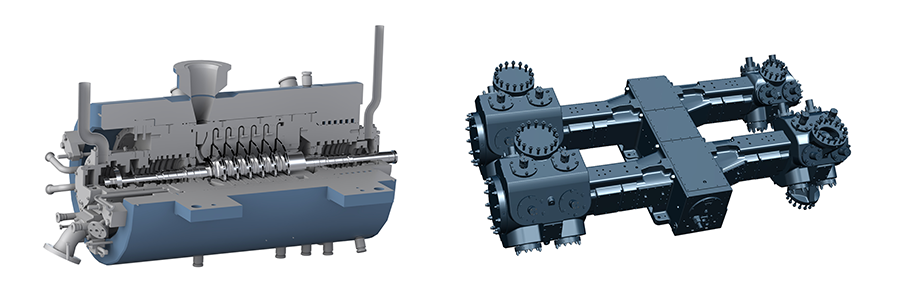
Centrifugal vs Reciprocating Compressors: Different Working Principles Define Performance Characteristics
The performance characteristics of compressors originate from differences in their working principles. Centrifugal compressors and reciprocating compressors adopt fundamentally different gas compression methods, which directly influence their applicable flow ranges, pressure capabilities, and suitable operating scenarios.
QualRotate has achieved standardized product development in the centrifugal compressor field while also maintaining the capability to manufacture customized reciprocating compressors. This allows the company to provide suitable solutions based on different process requirements.
Centrifugal Compressors: Continuous Compression Based on Centrifugal Force
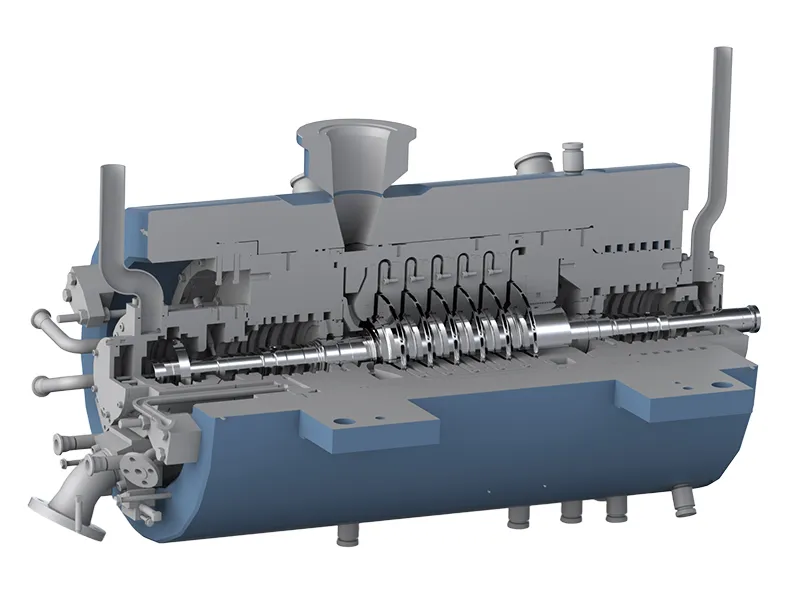
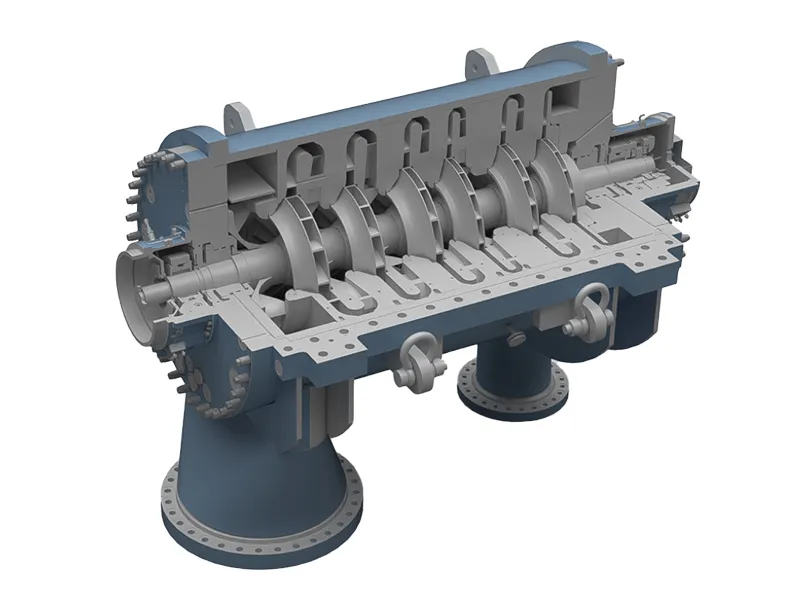
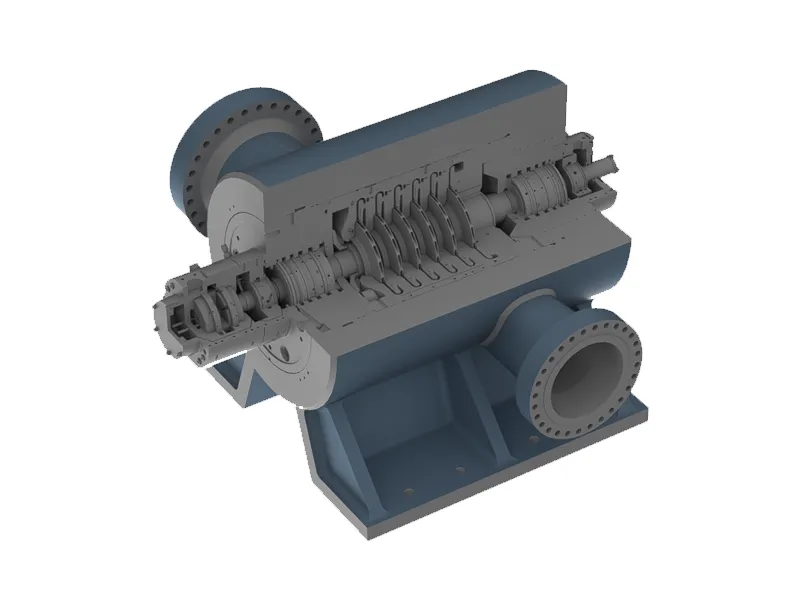
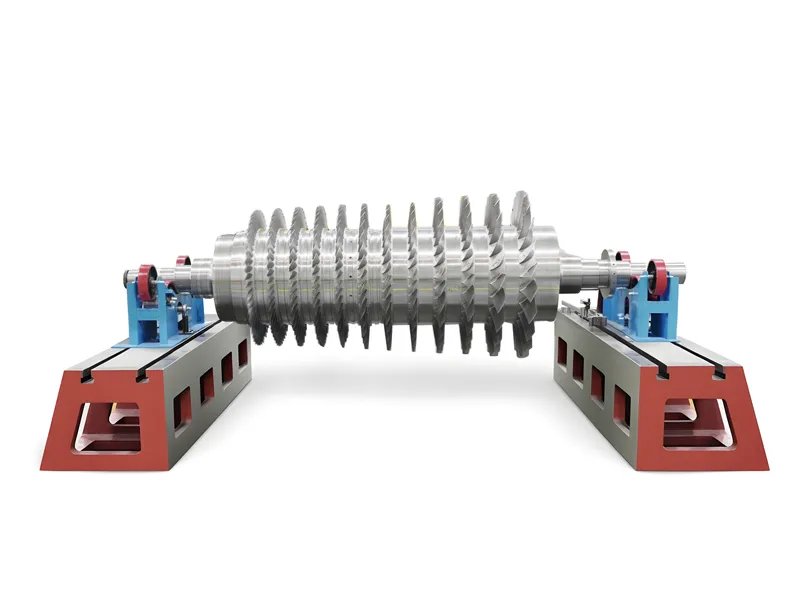
Centrifugal compressors use high-speed rotating impellers to accelerate gas and increase its kinetic energy. The gas then flows into the diffuser and volute, where the flow channel expands and converts kinetic energy into pressure energy, thereby achieving a continuous and stable compression process.
Because gas flows continuously through the compressor, centrifugal compressors are typically suitable for medium-to-high flow operating conditions that require continuous operation. The stable gas flow characteristics also contribute to relatively low vibration levels and reliable operation in large industrial systems.
This technical principle forms the basis for the efficient operation of QualRotate’s CP and SP series centrifugal compressors, which are widely used in industrial applications requiring continuous gas supply.
Reciprocating Compressors: Intermittent Compression Through Volume Change
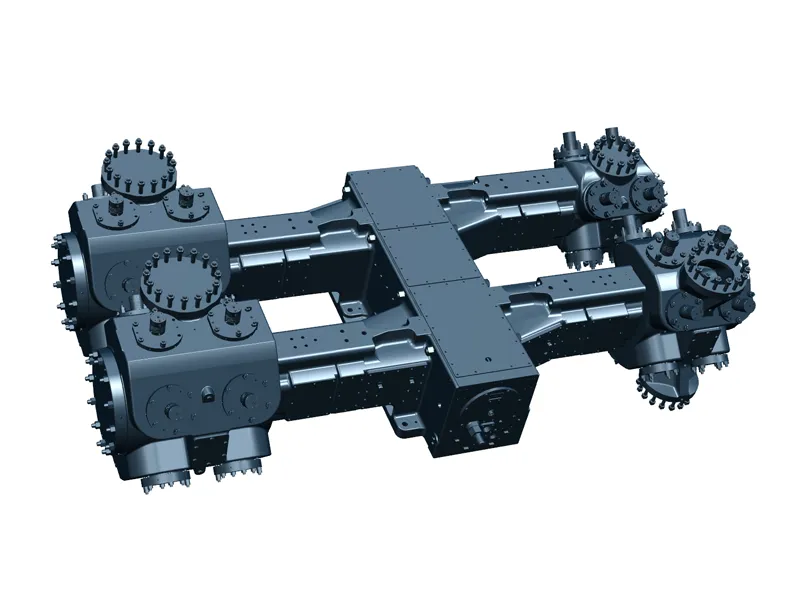
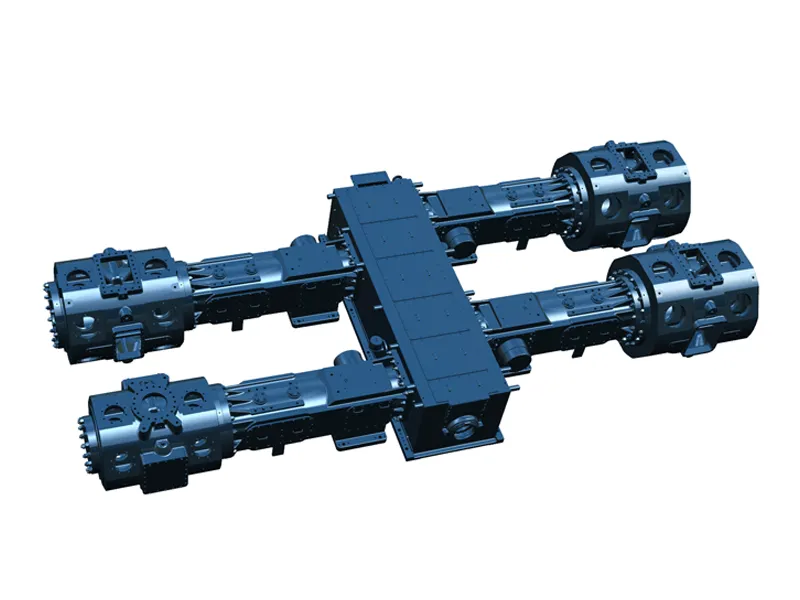
Reciprocating compressors compress gas by periodically changing the volume of the compression chamber through the reciprocating motion of a piston inside a cylinder.
During the suction stroke, gas enters the cylinder. During the compression stroke, the gas is compressed and discharged through the outlet valve, gradually increasing the gas pressure.
This positive displacement compression method allows reciprocating compressors to achieve relatively high single-stage compression ratios. Through appropriate multi-stage configurations, they can produce high-pressure or even ultra-high-pressure gas output. As a result, reciprocating compressors have clear advantages in high-pressure process applications.
QualRotate improves the stability and reliability of reciprocating compressors operating under high-pressure conditions by optimizing valve structures, transmission systems, and control strategies.
Centrifugal vs Reciprocating Compressors: Flow and Pressure Application Boundaries
Different working principles determine the operating ranges in which each type of compressor performs best. Operating within these ranges allows equipment to achieve higher efficiency and reliability.
Flow and Pressure Characteristics
Centrifugal Compressors
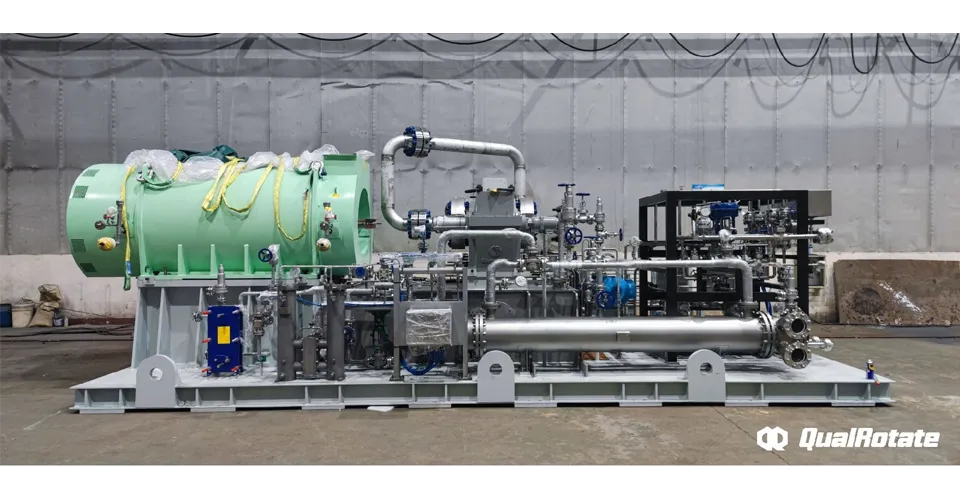
Centrifugal compressors are typically suitable for continuous compression under medium-to-high flow conditions. QualRotate’s centrifugal compressor product portfolio mainly includes:
CP Series (High-Pressure Applications)
Designed primarily for high-pressure natural gas processes and related industrial applications. The CP series provides stable compression performance at relatively high pressure levels and is commonly used in oil and gas production and natural gas processing.
SP Series (Medium-Low Pressure, Large Flow)
Designed for industrial systems that require large gas flow capacity. The SP series delivers efficient and stable gas transportation under medium-low pressure conditions and is widely used in oil and gas gathering systems and large chemical plants.
Reciprocating Compressors
Reciprocating compressors are generally suitable for operating conditions requiring medium-to-small flow rates but high pressure. With high single-stage compression ratios and multi-stage configurations, they can generate high-pressure or ultra-high-pressure gas output, making them particularly valuable in high-pressure process systems.
Operational Characteristics
Centrifugal Compressors
Centrifugal compressors do not contain reciprocating moving parts, resulting in relatively smooth operation with lower vibration and noise levels. The output gas pressure and flow are continuous and stable, making them well suited for large-scale continuous industrial production systems.
Reciprocating Compressors
Due to piston reciprocation, reciprocating compressors generate a certain degree of vibration and gas pulsation during operation. However, they demonstrate strong adaptability to varying operating conditions and maintain good compression efficiency even at high pressure levels.
Through optimized structural design as well as vibration control and advanced control systems, the effects of pulsation on the overall system can be effectively reduced.
Compressor Product Portfolio: Coordinated Application of Centrifugal and Reciprocating Technologies
Based on its product portfolio and engineering experience, QualRotate provides adaptable compression solutions for various industrial scenarios through the coordinated application of centrifugal and reciprocating compressors.
Centrifugal Compressor Applications
Supported by the CP and SP series, QualRotate’s centrifugal compressors are widely used in industries including:
Typical application areas include:
CP Series Applications
SP Series Applications
Reciprocating Compressor Applications
In certain industrial processes such as fine chemicals, high-pressure gas injection, and special gas compression, reciprocating compressors remain essential equipment.
Typical applications include:
Providing high-pressure conditions for synthesis reactions in the fine chemical industry
High-pressure gas injection and well testing processes in the oil and gas industry
High-pressure compression and filling of gases such as oxygen, nitrogen, and hydrogen in the industrial gas sector
Through customized design and systematic engineering services, QualRotate provides reliable equipment support for these high-pressure applications.
Conclusion
Centrifugal compressors and reciprocating compressors are not simple substitutes for each other. Instead, they represent two technical approaches developed to address different operating requirements. Proper compressor selection requires a comprehensive evaluation of flow rate, pressure requirements, process conditions, and operational stability.
Through its standardized centrifugal compressor product portfolio and customized reciprocating compressor manufacturing capabilities, QualRotate has established a complete technical system covering equipment selection, design, manufacturing, commissioning, and operational support. This enables the company to provide compressor solutions that are well aligned with actual industrial operating conditions.
As industrial systems continue to demand higher efficiency, reliability, and digital integration, QualRotate is also advancing the intelligent development of compressor systems. Technologies such as remote monitoring, condition diagnostics, and predictive maintenance are being integrated to improve operational efficiency while reducing long-term maintenance costs.

 English
 中文
中文