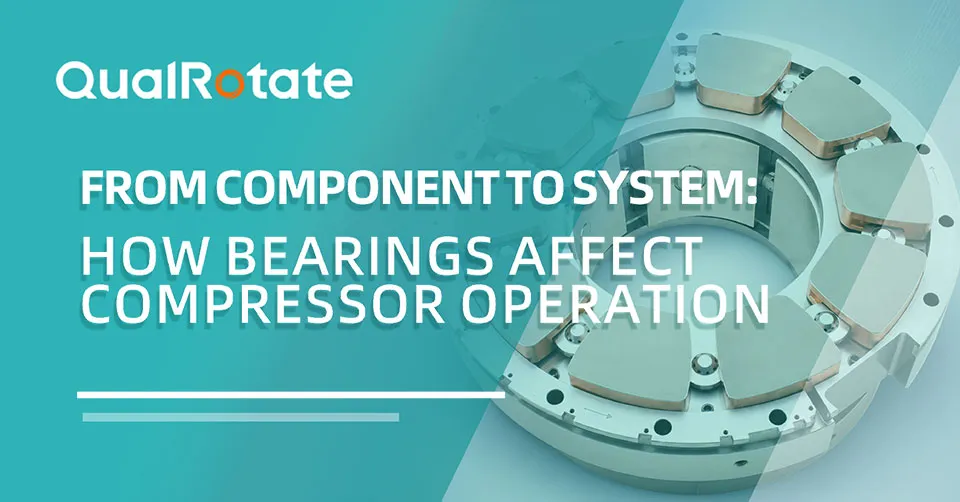
In a compressor, bearings are not the largest components, yet they always occupy a critical position in determining the operating condition of the entire unit. On the surface, they provide load-bearing and positioning functions. In practice, they determine whether the rotor can maintain stable dynamic characteristics and whether the complete shaft system can operate within a controlled range. At the same time, all operating conditions of the unit are ultimately reflected in the bearings. Stable vibration, controlled temperature rise, reliable sealing, reasonable maintenance intervals, and long-term continuous operation are all closely related to the working condition of the bearings.
For this reason, a bearing in a compressor should never be understood as an isolated component. Once the bearing condition changes, the shaft centerline trajectory, oil-film behavior, seal clearance, vibration response, and bearing pad temperature will all change accordingly. What appears to be a component-level issue often leads, after deeper analysis, to the operating quality of the entire machine and system.
The Importance of Bearings Begins with Stable Support
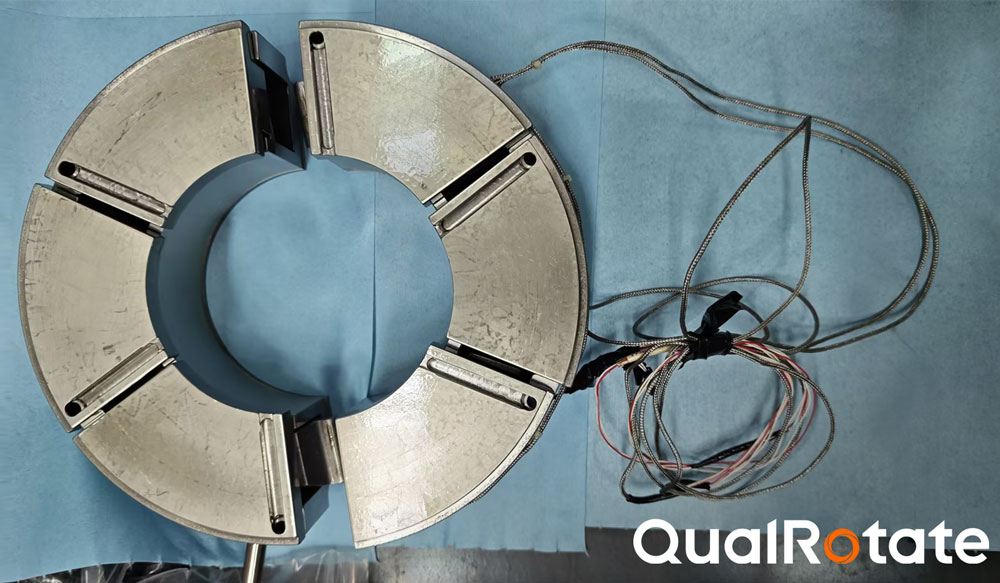
For a compressor, the basic function of bearings is not complicated. Radial bearings support the rotor weight and radial loads during operation, while thrust bearings carry axial forces and limit axial displacement of the rotor. From a functional definition perspective, this distinction is already clear. However, in engineering practice, the focus goes far beyond this basic definition.
For compressors, the more important question is whether the bearings can continuously provide stable support under actual operating conditions. Speed changes, load changes, medium changes, and temperature and thermal growth and fit conditions also change. If a bearing can only meet the load requirement at one nominal operating point, it will still be difficult to support stable, long-term operation of the equipment. Only when stiffness, damping, oil film, clearance, temperature rise, and fit relationships are all within a reasonable range can the rotor system truly become controllable.
Therefore, the value of bearings in compressors lies not only in carrying loads, but also in keeping the rotor in a stable, predictable, and recoverable support condition throughout operation.
Why High-Speed Compressors Place Particular Emphasis on Bearing Solutions
For high-speed centrifugal compressors, hydrodynamic sliding bearings are widely used. Once a complete and stable oil film is formed, the bearing pad and shaft operate under a fluid-friction condition. With high load-carrying capacity, low friction loss, good operating stability, and long service life, this type of bearing has become a core component in high-speed compressors.
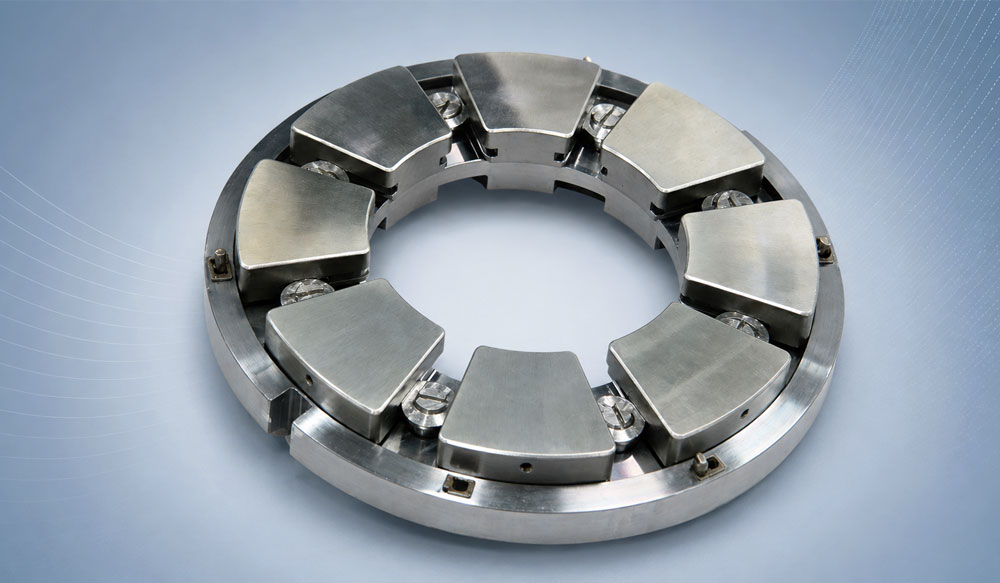
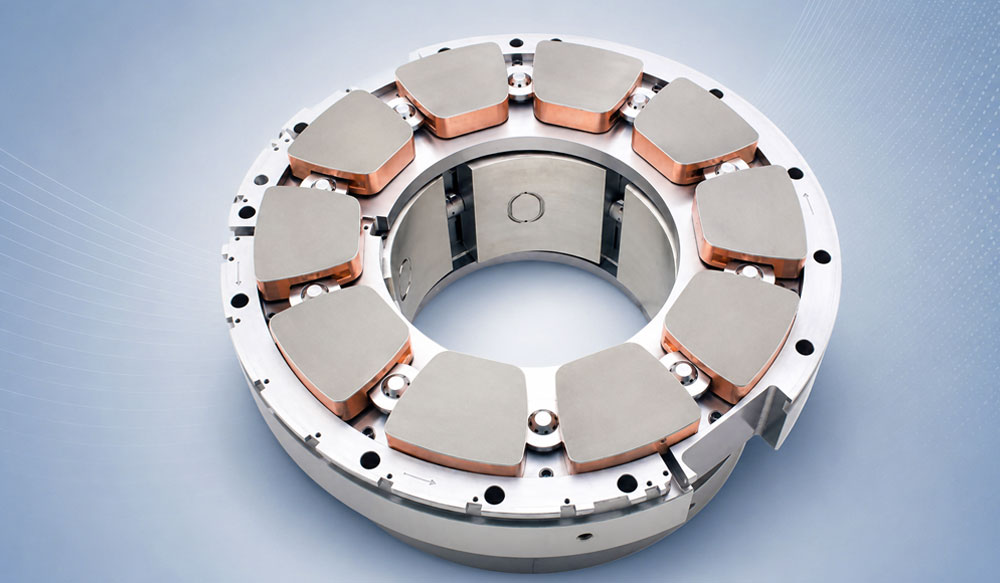
Under more demanding operating conditions, tilting-pad bearings are frequently adopted because they can more effectively improve operating stability. When operating conditions fluctuate, the pads can adapt their position accordingly, making it easier to form a suitable oil wedge and oil-film condition, thereby maintaining stable support. For compressors, this difference is ultimately reflected in vibration level, temperature behavior, power consumption, lubricating oil consumption, stable operating range, and long-term reliability. Thrust bearings are equally important. Their main function is to carry axial loads under different compressor operating conditions, especially the ultimate loads under extreme conditions.
What Defines a High-Quality Bearing Solution
From the perspective of compressor engineering, a qualified bearing solution must first meet requirements for load-carrying capacity, temperature-rise control, service life, and basic stability. A high-quality bearing solution must go further and match real operating conditions more closely.
It must operate reliably under the design condition and remain stable under foreseeable off-design conditions, rather than only being valid at the rated point. It also needs stiffness and damping characteristics that match the rotor system, allowing the unit to maintain reasonable vibration levels during startup, acceleration, load changes, and long-term operation. In addition, friction loss, material limits, lubrication conditions, and thermal changes must be considered together to avoid performance degradation under high temperature, load fluctuation, or changing lubrication conditions.
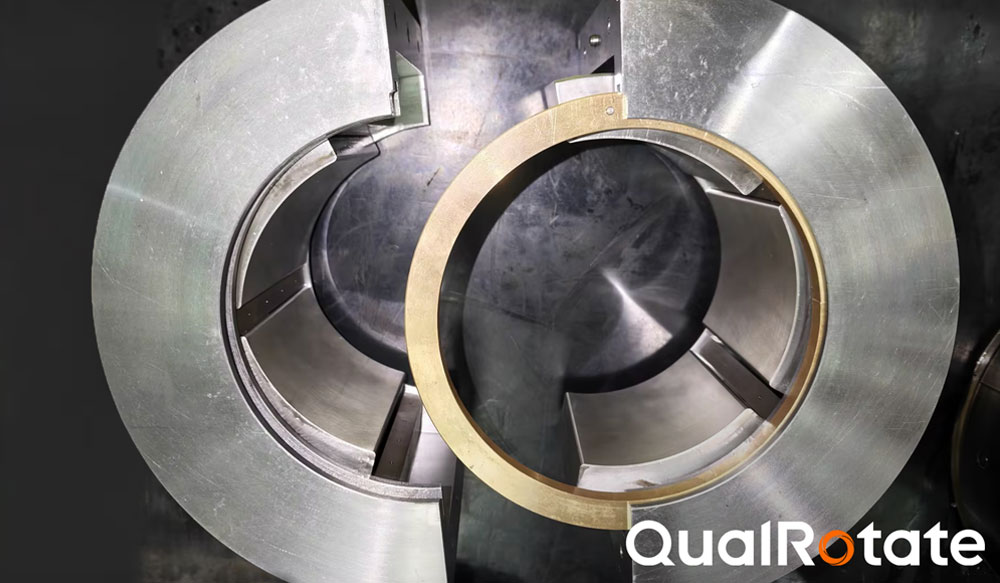
More importantly, a high-quality bearing must also be manufacturable and repairable in engineering practice. A design that works on paper but cannot be consistently realized through manufacturing accuracy, assembly control, or on-site overhaul will not translate into reliable operation. Therefore, the evaluation standard for a bearing solution is not limited to size or material. It lies in whether the solution can form a stable support system that is analyzable, manufacturable, assemblable, and maintainable within the complete compressor system.
Why Bearings Affect Compressor Performance
Compressor performance is not determined only by the aerodynamic section. Bearings also have a direct impact on the entire unit through their support condition.
First is vibration level. Bearing stiffness, damping, clearance, and oil-film condition change the dynamic response of the rotor, thereby affecting vibration behavior within the operating speed range. In many cases, high vibration problems observed on site can be traced back to the support system and to whether the original design is reasonable.
Second is temperature rise and friction loss. The operating temperature of high-speed bearings reflects not only lubrication condition, but also material limits, structural design, and heat dissipation conditions. Long-term high temperature reduces the safety margin of the bearing and affects the continuous operating capability of the unit. If the temperature remains too low, lubricating oil consumption may be excessive, bearing loss may increase, and overall unit efficiency may be affected.
Sealing condition is another important factor. Bearings and seals are always interconnected in compressors. Bearings influence the shaft centerline trajectory, while the rotor trajectory further affects seal clearance, load condition, and operating stability. Many leakage problems, shortened service life, or operating fluctuations can ultimately be traced back to changes in support conditions.
Finally, there is lifecycle cost. When bearing selection, design, manufacturing, or assembly restoration is not properly controlled, the first signs on site are often high vibration, abnormal temperature rise, frequent shutdowns, or shortened maintenance intervals. These problems eventually lead to higher maintenance costs and greater shutdown losses.
Why Resolving Bearing Issues Goes Beyond Just “Replacing a Set of Bearings”
This is one of the most easily underestimated points in compressor repair and upgrade scenarios.
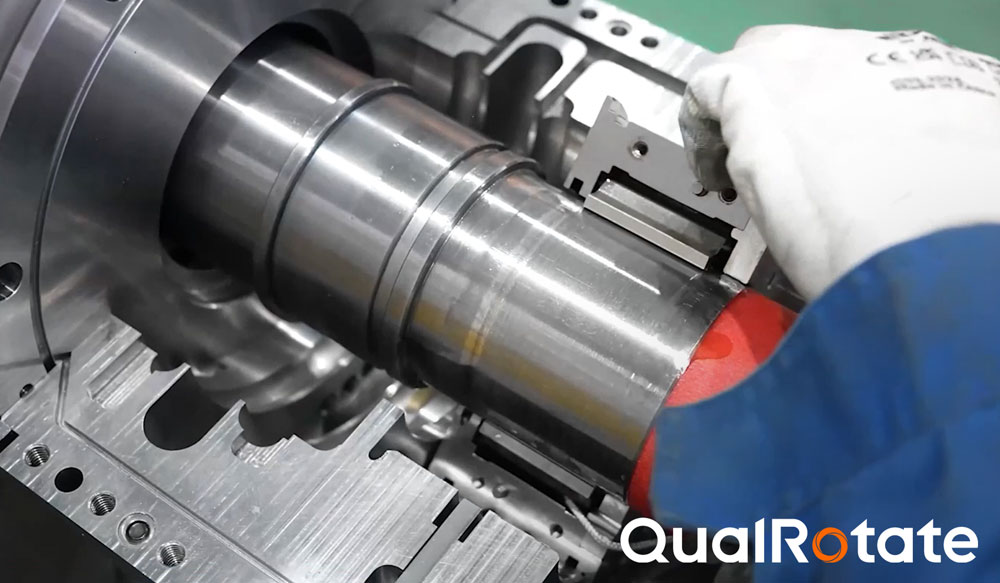
In engineering practice, bearing abnormalities are rarely isolated problems. When equipment enters return-to-factory repair, on-site overhaul, or upgrade modification, the real task is often not only to replace the bearing itself, but also to address the complete set of system conditions associated with it: rotor condition and dynamic characteristics, journal surface condition, seal clearance, hot and cold fit, assembly accuracy, and the precision of the overall support system.
In other words, although a bearing problem first appears at the component level, it is often the visible manifestation of a system-level issue. To solve it effectively, the analysis must return to the system level. Simply replacing components may only relieve the symptoms and may not restore the stable operating condition of the unit. Only by handling bearings, rotor, seals, and assembly restoration within one unified engineering logic can compressor operating quality truly be recovered.
This is why, in repair and upgrade projects, what customers really need is often not an isolated spare part, but a system-level restoration capability built around the actual operating condition of the unit.
Looking at Bearings Means Looking at Compressor Capability
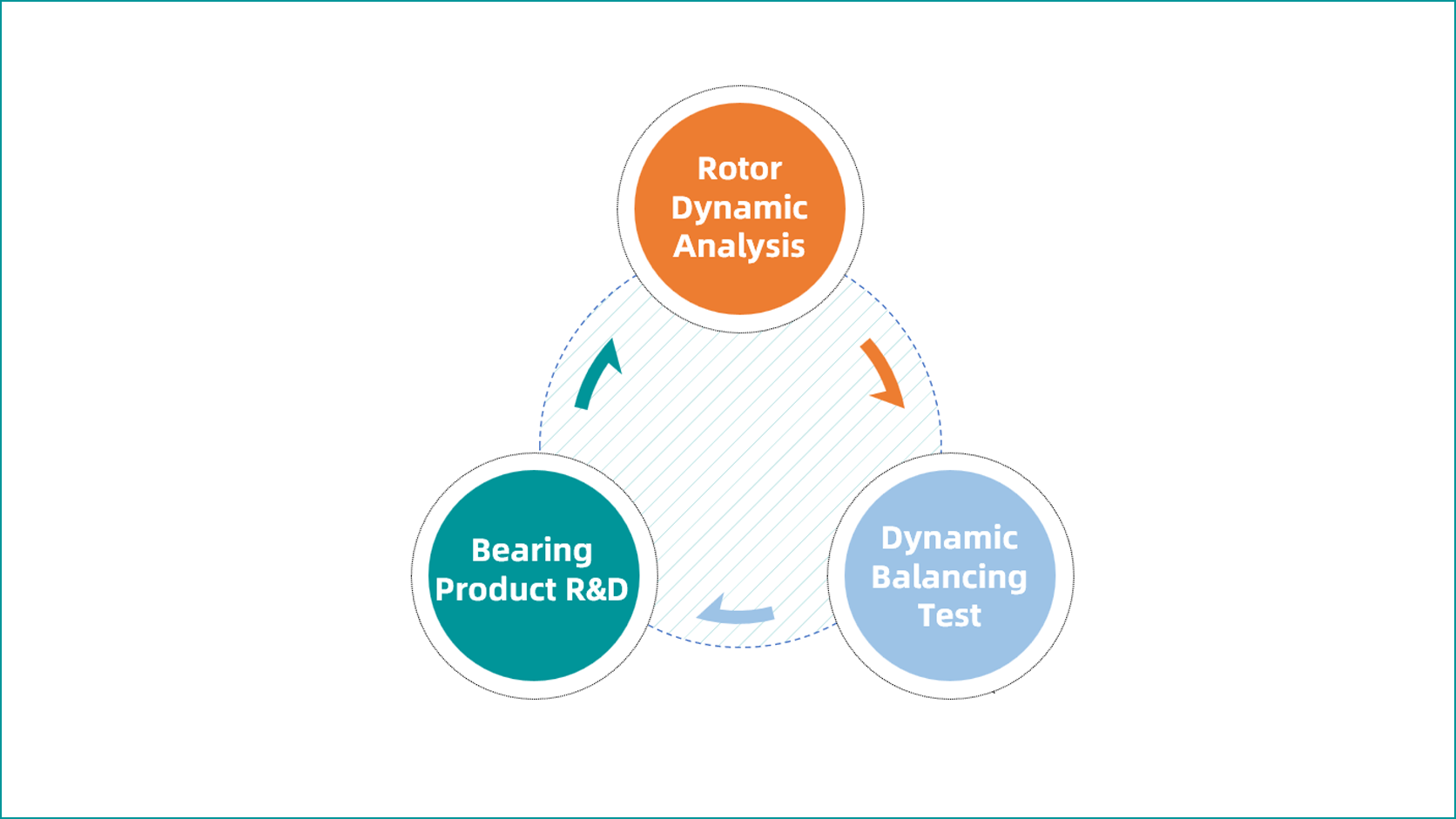
When bearings are used as the entry point for observation, what we see is never an isolated part. Bearings are a core reflection of overall compressor capability. They run through the full lifecycle of design, analysis, manufacturing, assembly, repair, and upgrade. Behind their operating condition are rotor dynamics analysis capability, bearing performance parameter design capability, oil-film and clearance control capability, thermal-fit control capability, and matching capability with the sealing system. This natural connection across the entire process makes bearings a concentrated expression of whole-machine engineering capability at the operating end.
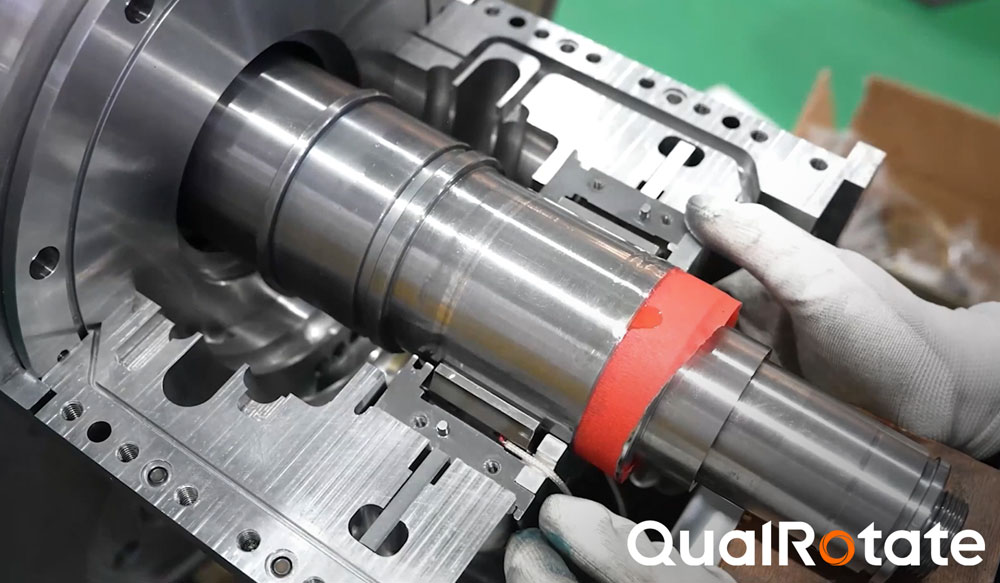
Bearings determine more than static and dynamic load-carrying capacity. They determine whether a compressor can remain stable, controllable, and sustainable under complex operating conditions over the long term. Therefore, bearing-related issues must not be addressed only from a single-component perspective. They must be analyzed and handled at the rotor-system level and even at the whole-machine level. This is the core source of excellent unit operating quality and the underlying logic of compressor engineering.
For QualRotate, focusing on the lifecycle operating condition of compressors, we have built an integrated engineering capability covering rotor dynamics analysis, bearing design and selection, precise oil-film and clearance calculation, full-process control of manufacturing and assembly, as well as on-site repair and upgrade optimization. Bearings are a key node connecting design, manufacturing, and end-user service, and they are also a core carrier through which QualRotate’s whole-machine engineering capability is truly implemented at the operating end of the unit.
If you are facing compressor bearing-related operating challenges, we welcome you to communicate with QualRotate’s professional engineering team. Based on your actual operating conditions and core requirements, we can provide customized system solutions and full-lifecycle technical support to help safeguard the long-term reliable operation of your unit.[Contact Us]

 CN
CN